Facial Recognition Door Lock in Singapore

The most seamless way to secure your home is one that requires nothing from you at all. Facial recognition door locks have made that a reality, replacing keys, PINs, and fingerprint sensors with instant biometric identification that works the moment you approach your door. For HDB flats, condominiums, and landed properties in Singapore, this upgrade means a more secure entry point and a smoother daily routine.

Solity brings that capability to your front door through a range of top-tier models, backed by precision Korean engineering and built to perform reliably where it matters most.
Our Products

Facial Recognition Door Lock in Singapore

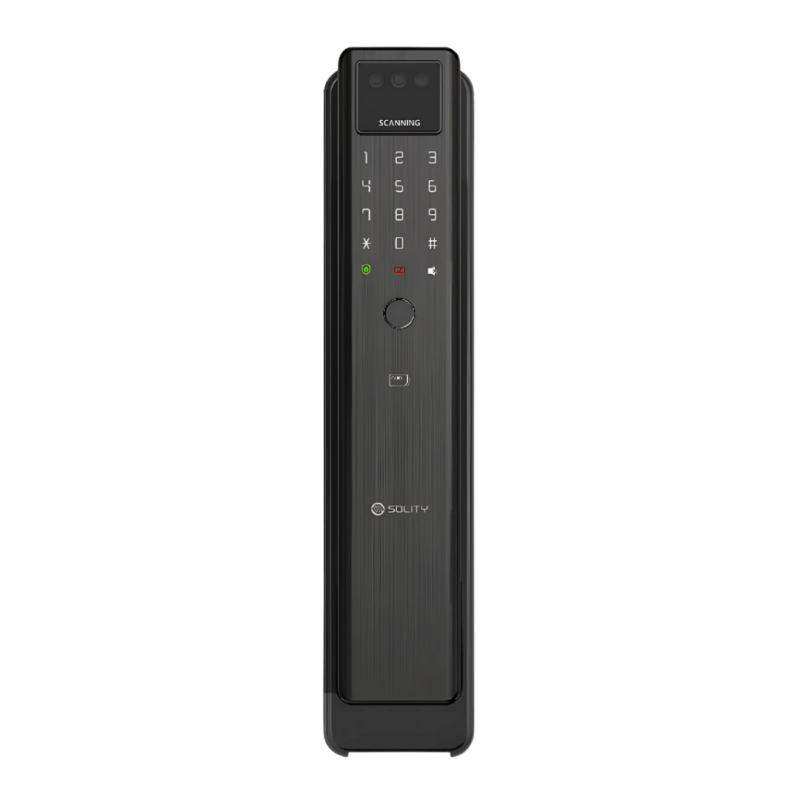
Solity GEA-1000
Face

Facial Recognition Door Lock in Singapore

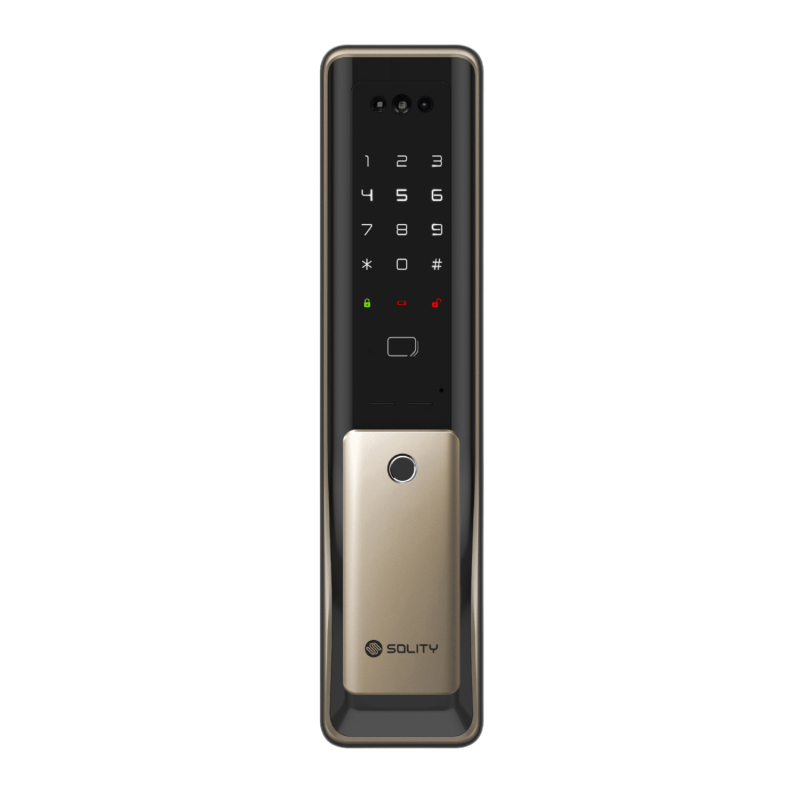
Solity GP-6000
Face Recognition

What is a Face Recognition Door Lock?

At its core, a face recognition door lock is a biometric access device that grants entry based on your facial identity rather than something you carry or remember. No keys, no PINs, no contact. The lock stores encrypted facial profiles directly on the device, so your biometric data stays local and is never transmitted to an external server. The practical result is an entry system where access is personal, non-transferable, and impossible to forget.

How Does a Face Recognition Door Lock Work?

The process starts the moment you step up to the door. A built-in camera paired with an infrared sensor scans your face and maps key reference points in real time. That data is then checked against encrypted templates built during your initial enrolment, where you register your face through the lock’s interface or app with a few seconds of scanning from multiple angles.

Before granting access, liveness detection confirms the face scan is coming from a live person, not a photograph or a screen. A confirmed match releases the door in under one second. The more thorough your enrolment, the more reliably the face scanner performs across different lighting conditions and gradual changes in appearance over time.

What Features Should You Look for in a Face Recognition Lock?

The difference between a capable facial recognition door lock and a frustrating one comes down to a handful of core specifications. Here’s what to evaluate:

Recognition Accuracy

Look for verified false acceptance and false rejection rates from the manufacturer. Lower numbers on both mean fewer security gaps and fewer inconvenient lockouts.

Recognition Speed

The entire value of a hands-free lock depends on it feeling instant. Sub-second recognition is the benchmark.

User Capacity

Some locks cap at ten profiles. Others support fifty or more. Know your headcount before committing to a model, and build in room for future changes.

False Acceptance and Rejection Rates

One measures security. The other measures reliability. Both need to be low, and both should be documented by the manufacturer rather than implied.

Camera Quality

The sensor is the foundation of the entire system. Higher resolution means more detail captured, which translates directly into more accurate matching under real-world conditions including glare, shadows, and shifting ambient light.

Night Vision

A lock that can’t see in the dark has a fundamental gap. Infrared illumination or a dedicated low-light sensor ensures consistent performance at any hour.

Smart Home Integration

If your home runs on Apple Home, Google Home, Alexa, or the Matter standard, verify compatibility before purchase. A digital door lock that integrates with your ecosystem becomes part of how your home operates.

Choosing the Right Facial Recognition Lock

Choosing well means being honest about how your household actually functions day to day. These are the factors worth weighing:

Balancing Cost vs Performance: Is a Face Scan Door Lock Worth It?

A face scan door lock costs more than a fingerprint or PIN alternative. What that premium buys is a fundamentally different experience: faster access, zero physical contact, and security that cannot be undermined by a shared code or a misplaced key.

For family households with multiple daily users, that value is felt every time someone walks through the door. For premium condominiums, it is a natural fit with the standard of the property. For lower-traffic entry points or tighter budgets, a code or fingerprint door lock remains a solid choice.

The honest question isn’t whether a face recognition lock is better. It’s whether the difference matters enough for your situation. For households where it does, the cost makes sense quickly.

Face Recognition Door Lock vs Traditional Door Locks

Every traditional entry method places a small but cumulative demand on the people who use it. A face recognition door lock eliminates that demand entirely. The difference plays out across four areas:

No Keys to Lose

A key is a transferable object with no loyalty to its owner. It can be copied, lost, or picked up by the wrong person. Facial recognition makes access non-transferable by design, binding entry to your identity rather than an item in your pocket.

No PIN to Forget

PINs get forgotten under pressure, observed over shoulders, and shared when they shouldn’t be. A face recognition lock removes the credential from the equation entirely.

Faster Access

Door open in under a second, with nothing retrieved, pressed, or entered. Multiplied across an entire household and repeated across every single day, that ease becomes part of how your home feels.

Better Hygiene

Zero contact means zero shared surface. A face recognition door lock is the cleanest entry method available.

Installing Your Face Recognition Door Lock

A face recognition lock is only as good as its installation. Mounting position, angle, and height directly affect how accurately the face scanner reads users of different heights throughout the day. Getting that right from the start prevents the recognition inconsistencies that frustrate users long after the fitting is done.

Key installation considerations:

  • Door Type and Material: Metal and solid-core doors require specific fixings and drilling technique. An installer unfamiliar with your door type introduces unnecessary risk to both the fitting and the door itself.
  • HDB Compliance: HDB main door installations must comply with HDB guidelines and SCDF fire code requirements. Only approved models should be fitted, and no modification should exceed what the guidelines permit.

Solity handles the entire process. From assessing your door type and confirming HDB compliance to the physical fitting, drilling, and system configuration, every installation is carried out by trained technicians who understand both the product and the regulatory requirements it operates within.

Frequently Asked Questions About Face Recognition Door Lock

1Are face recognition locks secure?
Yes. Facial templates are encrypted and stored locally on the device, and liveness detection prevents spoofing attempts. The result is a system that is more resistant to unauthorised access than PIN or key-based alternatives, provided the lock is from a manufacturer with verified performance specifications.
2Can they be fooled by photos?
Not on locks with liveness detection. The system analyses depth, infrared data, and subtle movement to confirm it is reading a live face. A printed photograph or a screen image won’t pass that check.
3What happens if the lock doesn't recognise me?
Solity lock prompts a retry or switches to a backup method. PIN, RFID card, fingerprint and physical key are standard fallback options on our models, so a failed face scan doesn’t mean a locked door. Persistent failures are usually resolved by re-enrolment.
4Can I still use a physical key or keypad as backup?
Yes. Multiple access modes are standard on most face recognition locks. PIN, RFID card, and physical key cylinder are typically included, ensuring the lock remains accessible even if the face scan function is temporarily unavailable.
5How do face recognition locks handle glasses, hats, facial hair?
Most modern recognition systems are trained to handle common variations in appearance without issue. For more significant changes, re-enrolment is a straightforward fix that restores reliable performance.
6Will the lock still work in the dark?
Yes, on models with infrared night vision or a low-light sensor. Verify this is specified for your chosen model before purchase. A face scanner without night vision capability isn’t suitable as a primary entry device.
7Are face recognition locks SCDF/HDB approved?
Approval is granted per model, not per brand. Solity's HDB-approved face recognition locks meet the guidelines for main door installation under SCDF fire code requirements. Check the approval status of your specific model before purchase.
8How much do face recognition locks cost on average?
Expect to pay between $400 and upwards of $1,000 depending on model, features, and installation complexity. Advanced liveness detection, higher user capacity, and smart home integration place models at the higher end of that range. Installation is quoted separately and varies by door type.
9Are face recognition locks worth the extra cost over fingerprint or code locks?
For households where daily convenience, hygiene, and a hands-free experience are priorities, yes. The value compounds over time in ways that a one-time price comparison doesn’t fully capture. Where the budget is tight and access demands are modest, a fingerprint or code lock remains a practical and reliable choice.